
The main purpose of Emissions Regulations is to limit, reduce and control air pollution. Emission control is a function of engine technology, fuel quality and traffic speed (congestion). The objective of clean air is achieved only when all these three come together.
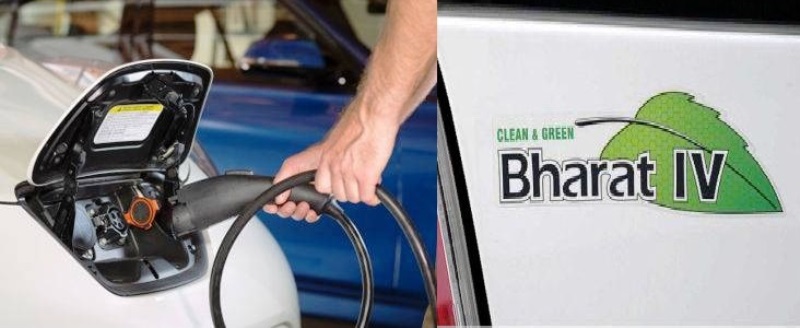
On July 15 the MoSRTH issued the draft notification for the next stage of emissions regulations. According to draft notification GSR 522, effective April 1, 2010, Bharat Stage IV norms will be applicable to 11 metros while Bharat Stage III will be applicable to the rest of the country.

Trucks and buses are predominantly powered by heavy duty diesel engines. Modern diesel engines are lighter and are more powerful, fuel efficient and environment-friendly. Bharat Stage IV diesel engines in 2010 will have particulate matter (PM) emissions that are over 95 per cent lower than the Bharat 2000 (BS 1) diesel engines manufactured in the early part of this decade.
This emission reduction is achieved by a combination of improved diesel engine technology and low sulphur (50 ppm) diesel fuel. Combined with reduced traffic congestion this has the potential to check air pollution dramatically.
Today there are two proven approaches to Euro IV emissions compliance. High pressure common rail fuel injection forms the foundation and is common to either approach. Then, to reduce oxides of nitrogen (NOx) and particulate matter in diesel exhaust, the first option is the selective catalytic reduction (SCR) after-treatment approach and the second is exhaust gas recirculation (EGR) with diesel oxidation catalyst or open filter.

SCR is based on running an optimized combustion in the engine that allows it to operate at more optimal combustion temperatures providing better power, fuel efficiency and lower soot (PM) generation. But this process produces higher NOx. To reduce NOx to levels required by emissions standard, a synthetic urea solution such as Adblue is injected into the exhaust stream. In the presence of a catalyst, Adblue turns into ammonia and carbon-dioxide, which then reacts with the NOx to create nitrogen and water vapour, or 2N2 + 3H2O.
The SCR catalyst also acts to reduce soot to an extent. Thus the SCR process reduces soot or PM in engine combustion and Nox and further PM reduction in the after-treatment system.
Now about cooled exhaust gas recirculation (EGR) + DOC / open filter. Cooled EGR introduces cooled exhaust gas, which is low in oxygen, back into the engine, depriving the combustion event of some of its oxygen. This reduces the combustion temperature and lowers NOx production. The downside is that the lower-temperature diesel combustion is less efficient, so it creates more particulate matter and burns more fuel.
The high soot or particulate matter produced during combustion is reduced using oxidation catalyst or open filter. This process results in significantly increased engine heat rejection. In contrast to the SCR process, this process reduces NOx in the engine and soot in the after-treatment process.
As with all technology comparisons aimed at proving the same solution, there are pros and cons to consider for both the technologies that enable compliance to Euro IV emissions. However, both solutions are proven technologies for markets to choose from.